The process

The frame is finished long before it looks finished.

Acetate is a living material. It absorbs moisture, relaxes after cutting and keeps moving for months. Every stage below exists to control that movement — because a frame that changes shape in the display case is a return, not a sale.

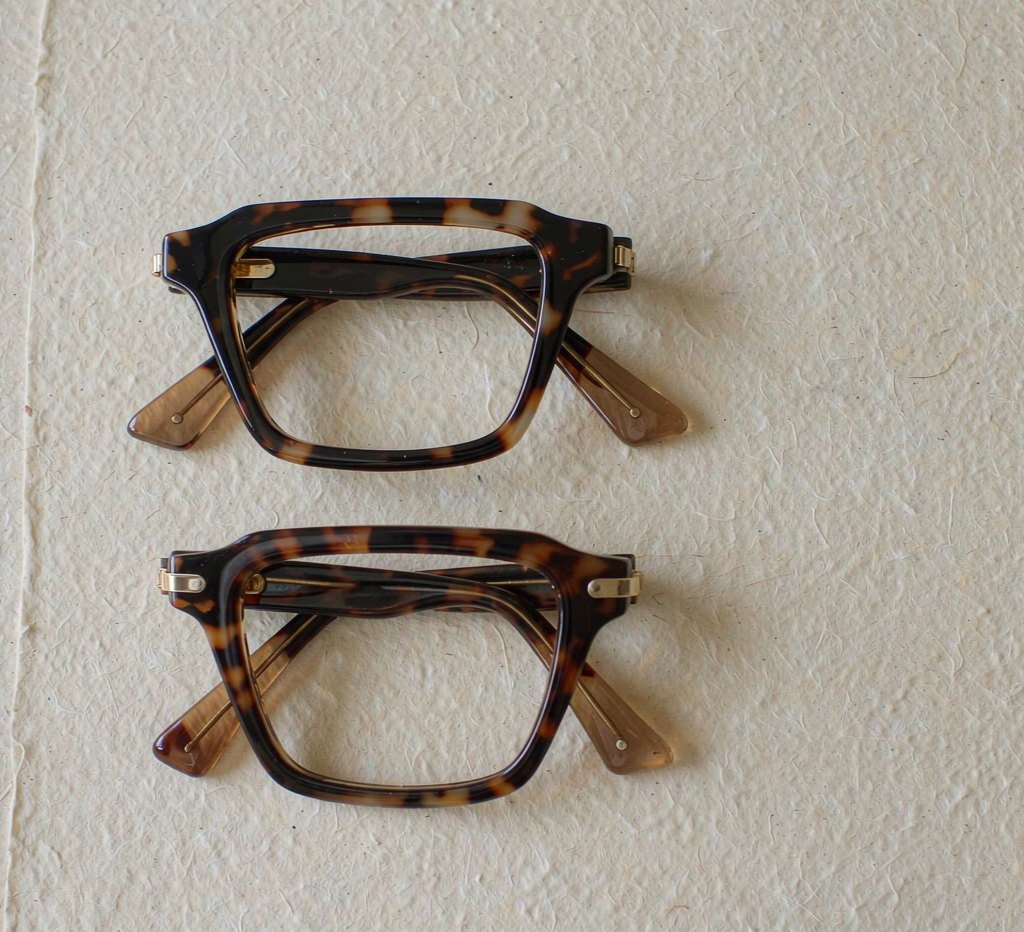
Two tortoiseshell acetate frames laid on textured paper
01 — Material

Season the block before you cut it.

We buy cellulose acetate sheet from Italian and Japanese mills, then store it for a minimum of 21 days at 23 °C and 50% relative humidity. Cutting a block straight off the pallet is faster and cheaper. It also guarantees that the frame will shrink 0.2–0.3 mm within a season, and that lenses will no longer seat in their grooves.

Sheet thickness
4 / 6 / 8 / 10 mm
Seasoning
21 days minimum
Colour matching
Pantone or physical sample
Lamination
Pressed in-house, up to 5 layers
Stages

Six stages, ninety hours of work.

A single pair of acetate frames passes through roughly ninety hours of machine and hand time before it is packed.

01

Cutting

CNC, 5-axis

Front and temples are cut from the seasoned block on a 5-axis machining centre, leaving 0.4 mm of stock for finishing.

  • Roughing pass, then finishing pass at 18,000 rpm
  • Coolant temperature held at 18 °C ±1
02

Hinge milling

±0.03 mm

The hinge pocket is milled and the screw bore reamed in the same setup, so pocket and bore share a datum. Drilling alone drifts by up to 0.15 mm across a batch.

  • Pocket depth checked every 50 pieces
  • Hinge cycle tested to 10,000 open/close
03

Tumbling

36 hours, 8 barrels

Wood and corncob media in a wet barrel remove tool marks without rounding the edges. This is the stage most factories shorten — and the one that determines how the frame feels in the hand.

  • Three grades of media, progressively finer
  • Barrel load recorded per batch
04

Polishing

12 stages, by hand

Twelve stages from 400 to 3000 grit, then a dry-buff finish on cotton wheels. Hand polishing is slower than a robot cell, and the only way to keep the bridge and endpieces crisp.

  • Edge definition inspected under 3× magnification
  • No heat distortion at thin sections
05

Assembly

Hinge, temple, nose pad

Hinges are set with a torque-controlled driver, temples aligned on a jig, and nose pads fitted to the specified bridge width. Every frame is opened and closed by hand before it leaves the bench.

  • Temple alignment checked against a flat reference
  • Fold-flat test on 100% of units
06

Rest & final inspection

10 days, then AQL 1.0

Finished frames rest for ten days before packing. It costs warehouse space and prevents most winter cracking claims in northern European and Japanese markets.

  • Dimensional check against the 2D drawing
  • Lens fitting and drop-ball test where required
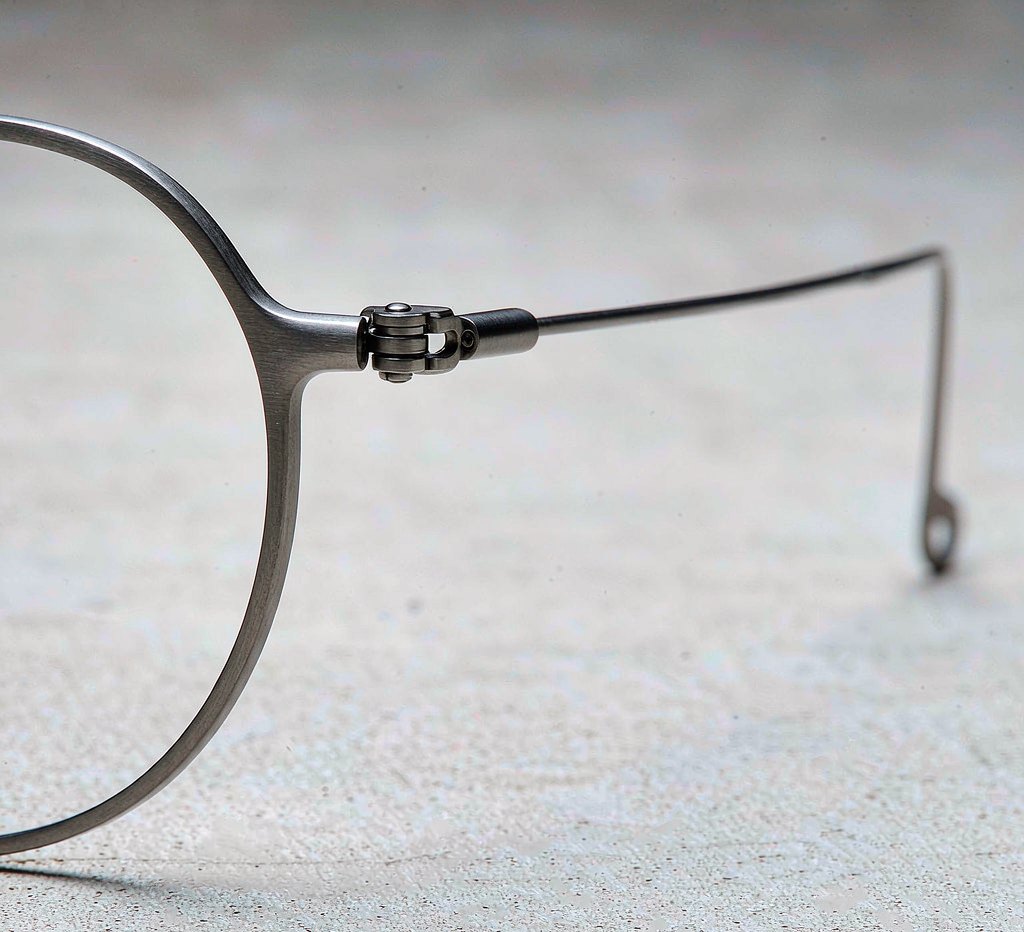
Macro detail of a 0.6 mm titanium eyewear frame
Metal & titanium

Eleven grams is a design decision, not an accident.

A titanium frame fails at the weld, not the wire. We laser-weld the bridge and rim locks in an argon envelope, then stress-relieve the assembly before plating. The result holds its shape under a 5 kg static load without memory loss.

Wire diameter
0.5 – 1.0 mm
Welding
Laser, argon shielded
Plating
3 µm, XRF verified
Static load test
5 kg, 24 hours
Tolerances

Numbers we will put in a contract.

ParameterStandardOur limit
Hinge pocket depth±0.10 mm±0.03 mm
Lens groove width±0.15 mm±0.05 mm
Temple length±1.0 mm±0.4 mm
Frame weight (pair)±1.5 g±0.5 g
Plating thickness2 µm min3 µm ±0.3
Colour match (ΔE)ΔE ≤ 2.0ΔE ≤ 1.0

Limits are verified on first-article inspection and re-checked at in-line checkpoints. Reports ship with every batch.

Visit

See it before you order it.

Factory visits are welcome in Shenzhen. We will walk you through the floor, show you live batches and let you handle the tolerance for yourself.